To the Last Bite: HARD CORE

It always starts in the morning.
In the kitchen, Brent stacks apples in cardboard bins—one filled to the brim with red, the other green. They’re cold, slightly wet from condensation. They disappear into the bottom of a pillowcase with a clunk, one after the other. Every day, he is a quiet consistency.
By 9 a.m., trail groups gather in the valley. Students meet their educator for the first time. Lunch is handed out piece by piece—loaves of bread, sunbutter and jelly, cookies—until the apples are reached. Each student gets one. And with it, a challenge.
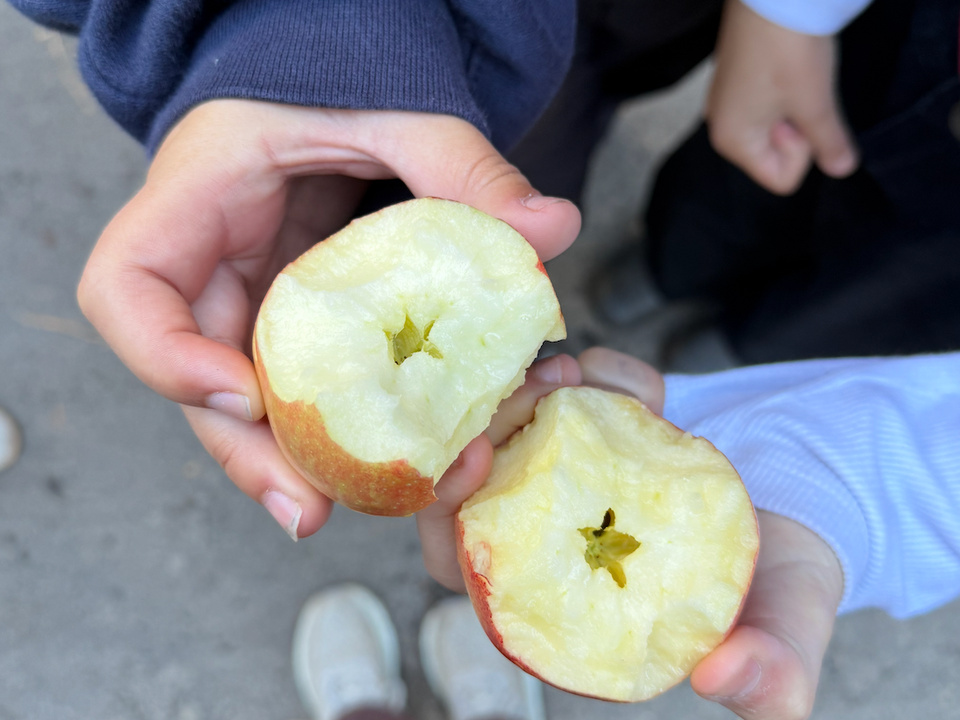
If they choose to, they can eat the entire apple—core, seeds, stem and all. It’s a challenge by choice.

Many initially ask why we can’t just throw the core out to the trees, and the Leave No Trace principle is introduced: take only memories, leave only footprints (and be careful where those feet tread). The idea then jumps to why they can’t just put them in the compost bags we carry. We explain that while we could, finishing the apple eliminates the waste entirely.
It's only a small act. Almost insignificant. However, it leaves a lasting impression, even on the students who don’t take the challenge or finish it in its entirety. It gives them something tangible, something they can feel and taste and decide for themselves. Waste becomes real. Responsibility becomes personal.
Some students decide immediately. Seconds after hearing about it, halfway through introductions, they’re already biting down to the center.
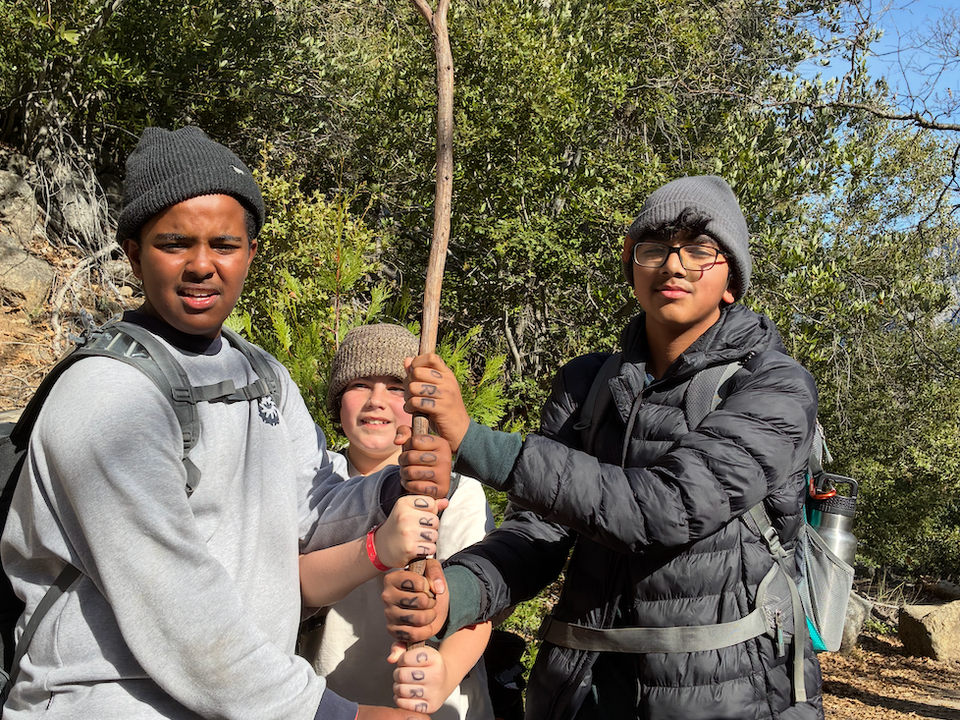
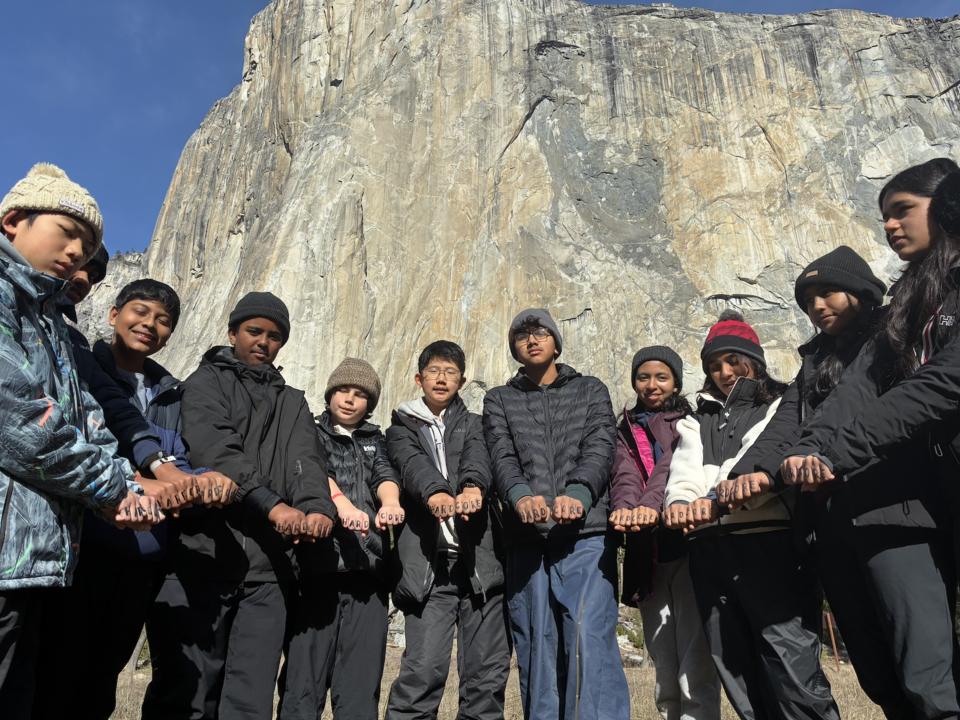
Some carry their apple untouched all day, rolling around at the bottom of their backpack. Some negotiate. “But aren’t the seeds poisonous?” “The stem is fibery, do I have to eat that part?” No matter how they wrestle with it, there’s always a moment when they approach their educator—chin lifted slightly, fist extended, knuckles out. “I did it.”
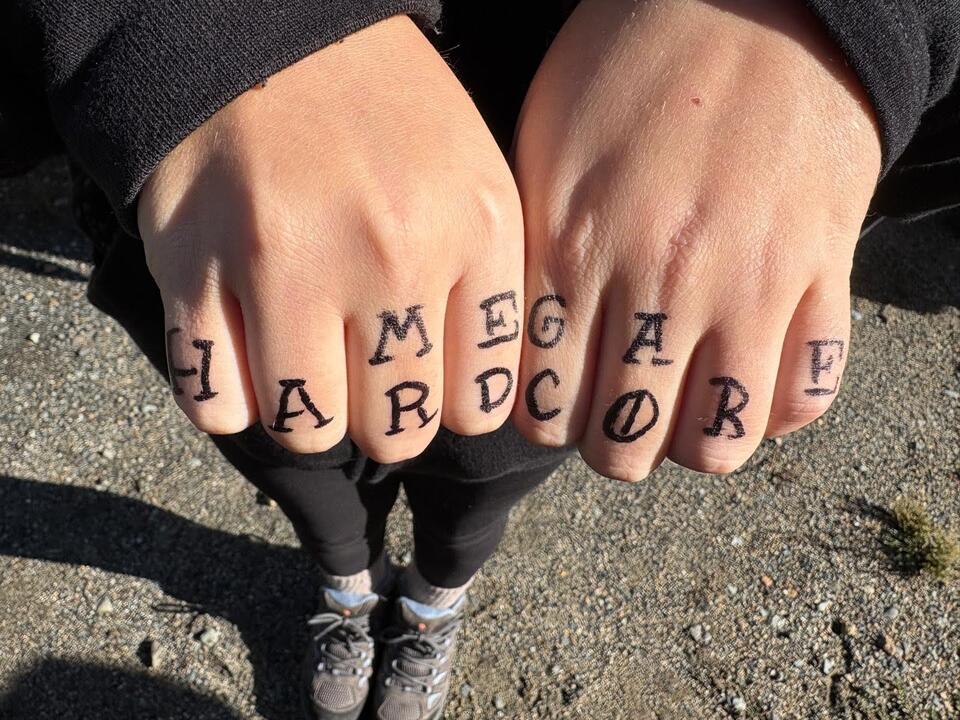
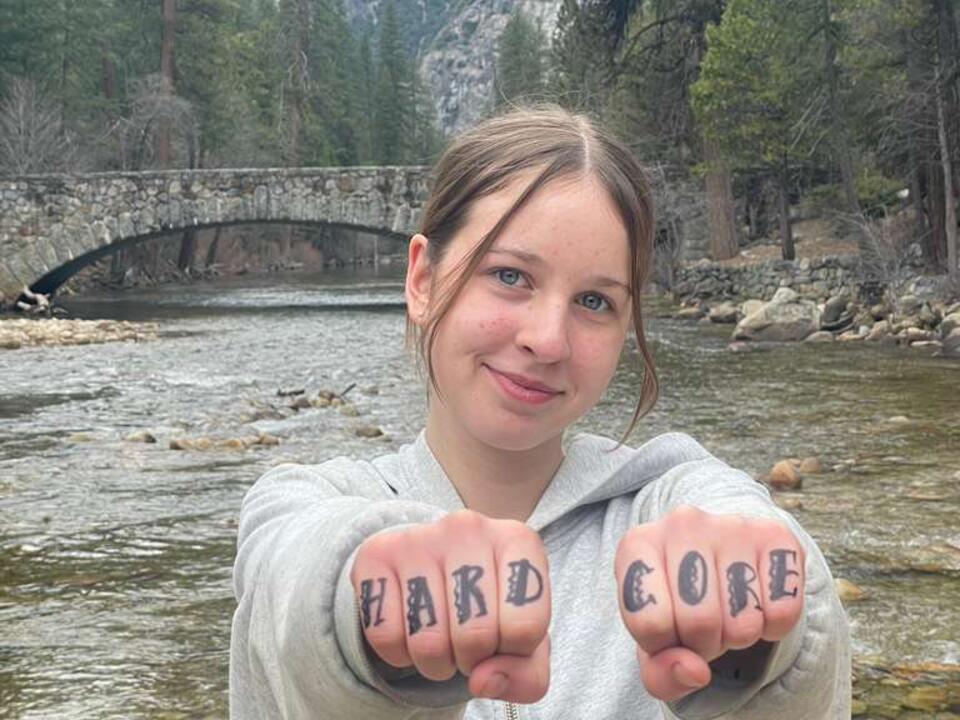
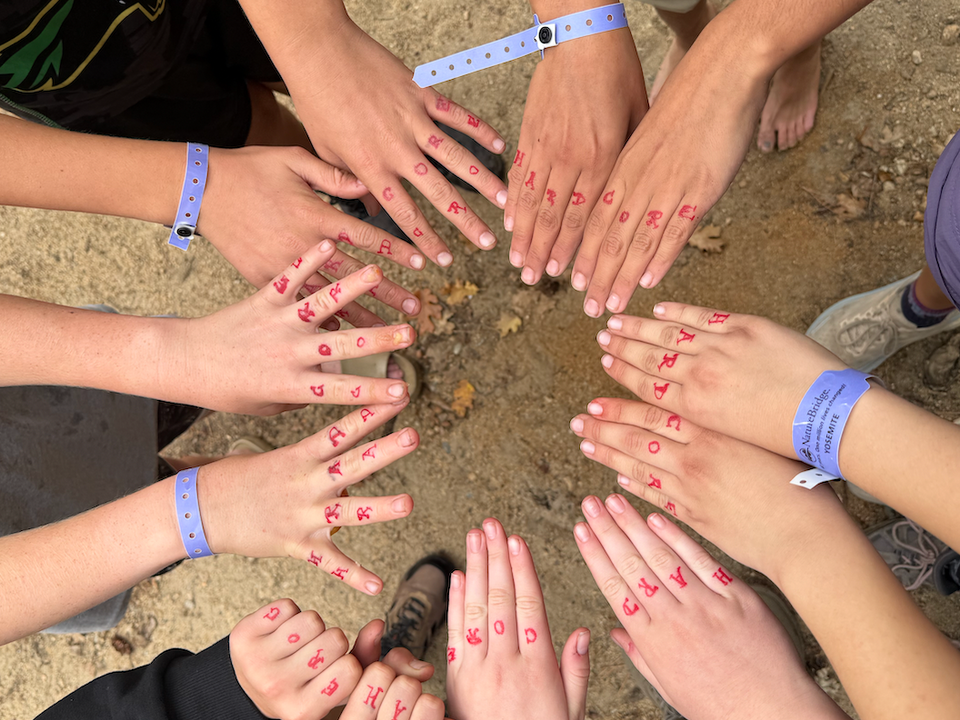
Each time a student finishes their apple they get crowned; their educators pull out their Expo markers or sharpies. Block letters across small knuckles spelling out HARD CORE. A tradition that has been carried down season after season. Every educator has a distinct font—some careful and square, others looping or bold. The handwriting becomes part of the legacy. Students hold their fists up to one another in the golden valley light like they’ve joined something ancient and secret. For a moment, they aren’t just students on a school trip. They’re part of a culture.
One student later shared: “My first tattoo, written in Expo Marker on my knuckles, soon faded, but the lesson of conservation never did. That's the thing about NatureBridge. You’re always in an environment where you’re learning.” –Jackson (2025 Olympic Student of the Year)
The tattoo may fade, but the pride doesn’t.

Ask an educator why Hard Core matters and they won’t say it’s about apples.
Isabella loves the way it gathers a group together. The moment someone decides to do it, the others circle in—cheering, daring, encouraging.
“I tell them the core is the most nutritious part,” she says, “and we connect it to Leave No Trace principles and food waste. It’s definitely sneaky teaching.”
She jokes that maybe it’s lasted so long because she has a cool font when she writes it across their knuckles. But she also notes how it spreads beyond one school or learning group. It becomes valley-wide—a shared language.
For Aly, Hard Core builds habit.
Students learn the power of leaving no trace through an accomplishable challenge. It turns an abstract environmental ethic into something physical. Don’t toss the core into the woods. Understand why. Finish what you carried in.
“They love showing off their knuckle tattoos,” she says. “I’ve even had students arrive already knowing they have to do the Hard Core challenge.”
The culture passes itself down.

Anna sees it as the beginning of immersive learning—the first crack in the idea that school only happens inside four walls.
“When I toss an apple to each of my field group on the first day, it’s usually the first time they giggle,” she says. “Then I explain the challenge and they look at me like I’m crazy.”
But that moment, the absurdity of it, shifts something.
The classroom here doesn’t look like the classroom at home. You can do a silly challenge and learn something real at the same time. The lesson teaches itself.
Natty calls it a metaphor. “It’s a good reminder of the things we waste that we don’t need to. Instead of throwing the core away, we make a fun game out of finishing it. We eat the most fibrous part of the fruit without contributing to the compost.”
And Julia sees it as a choice. She introduces Hard Core within the first thirty minutes of meeting her students. It becomes one of their first impressions of the week—challenge, camaraderie, a little bit of absurdity.
“When students come here, they have little control over the routine—the schedule, the food, their evening programs. Hard Core is a small challenge they can choose when they’re ready. Do they want to eat the core or not? The choice is theirs.”
What happens on the first day is rarely what happens on the last.
“I’ve seen students arrive saying they would never eat the core of an apple. By the end of the week they’ve stacked Hard Core tattoos across their knuckles and are showing them off to their friends.”
It creates pride. Growth. Stability in a place that can feel overwhelming at first.
“They can do hard things,” she says. “And who doesn’t like a fancy tattoo to prove it?”

The challenge didn’t originate here at NatureBridge. Plenty of outdoor education programs have passed around the same challenge. But something about it rooted itself deeply in Yosemite Valley—especially in the years after the pandemic, when rebuilding connection and culture mattered more than ever.
Kaitee Levinson, Education Manager, remembers learning a small twist from former educator Janaki Patel: eat the apple from the bottom up.
“When you eat it this way,” Kaitee explains, “they get a little core at a time AND reveal the flower.”
Students eat upward, core by core, until the star-shaped center opens and the seeds are exposed. Janaki would remind them that the apple is the flower of the plant—that what they’re holding is the final stage of something that once bloomed.
The rituals around it have evolved, too. What is now marked with knuckle tattoos used to be quieter—a high five, a shared moment of pride. Education Manager Kim Laizer recalls that some educators even handed out twisty ties from bread bags for students to lace onto their shoes—a small, makeshift badge of honor.
Kaitee also uses Hard Core to frame conversations about native and non-native species. She shares: “Apples have a long history in this park; orchards remain scattered throughout the valley and are protected as cultural resources by the National Park Service. The apples students carry may come from a grocery store. But here, they become a teaching tool—about ecology, history, stewardship.”
Hard Core is small. But it holds history.

Leave No Trace is easy to explain, but I find it’s far harder to feel. You can tell a student not to leave food waste on a trail. You can talk about human impact. You can diagram compost systems and invasive species. Or you can hand them an apple.
In finishing it—seeds, stem, fibrous center—they prove something to themselves. They can do something uncomfortable. They can finish what they start. They can take responsibility for the smallest trace. It’s a lesson disguised as a playful challenge. And maybe that's why it works.
By the next morning, the ink is gone—washed off in sink water or faded into skin. But the story lingers. The memory of standing in golden valley light, fist raised, having seen it through, start to finish.
Back in the kitchen, Brent reflects on the apples as the day winds down. “By the end of the day, I imagine they are nothing more than a tiny core that is put into the compost buckets,” he says. “I love being the start to everyone’s day. Hopefully I get them all off on the right foot.”
And sometimes that’s how stewardship begins—not with a grand gesture, but with an apple eaten to the core.
Stories

Virginia Teacher Night Recap: Emphasizing the Power of Outdoor Education
Our recent Teacher Night event in Chantilly, VA was a wonderful opportunity to connect with passionate educators from Loudoun, Fairfax, and the D.C. area and share the transformative power of outdoor education.

San Jose Teacher Nights Recap: Inspiring Bay Area Educators to Bring Learning Outdoors
Our recent Teacher Night events in San Jose, CA were a wonderful opportunity to connect with passionate Bay Area educators and share the transformative power of outdoor education.

Armstrong Scholars 2026 Trip Report
For the 2026 Armstrong Scholars, each day started with a song. Maybe it was "Unwritten" by Natasha Beddingfield, or "Believe" by Cher, or "Eye of the Tiger" by Survivor. Music and laughter carried us through our first waking moments—whether it was at 3 a.m. in wet sleeping bags preparing to hike up a pass, or at 8 a.m. next to a lake and ready for a rest day. We celebrated hard things the way we knew best—by dancing—at the end of a long day to warm up before slipping into our sleeping bags, or on top of a mountain pass, or at the trailhead at the end of a beautiful 65.7 mile-long journey.