Experiencing Yosemite “Alone”: The Solo Walk

When NatureBridge students arrive in Yosemite National Park with their peers, the excitement is instant—shared discoveries, group hikes, laughter echoing between granite walls. But one of the most powerful ways to connect with a place is by stepping away from the group and taking a moment alone. Yosemite belongs to everyone, and in solitude, it can feel like it belongs just to you.

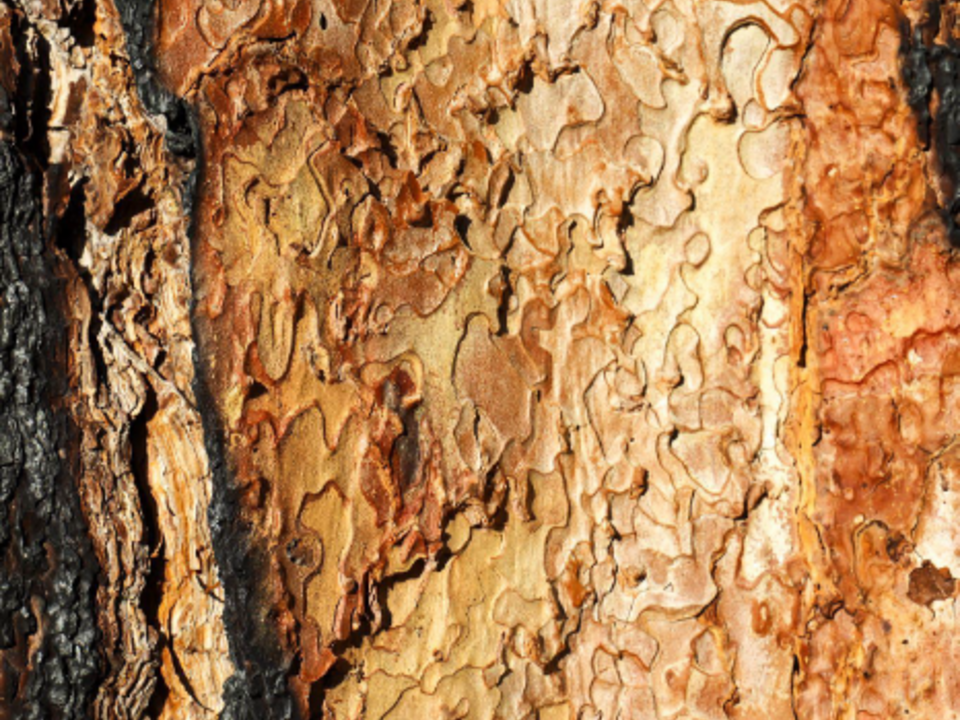
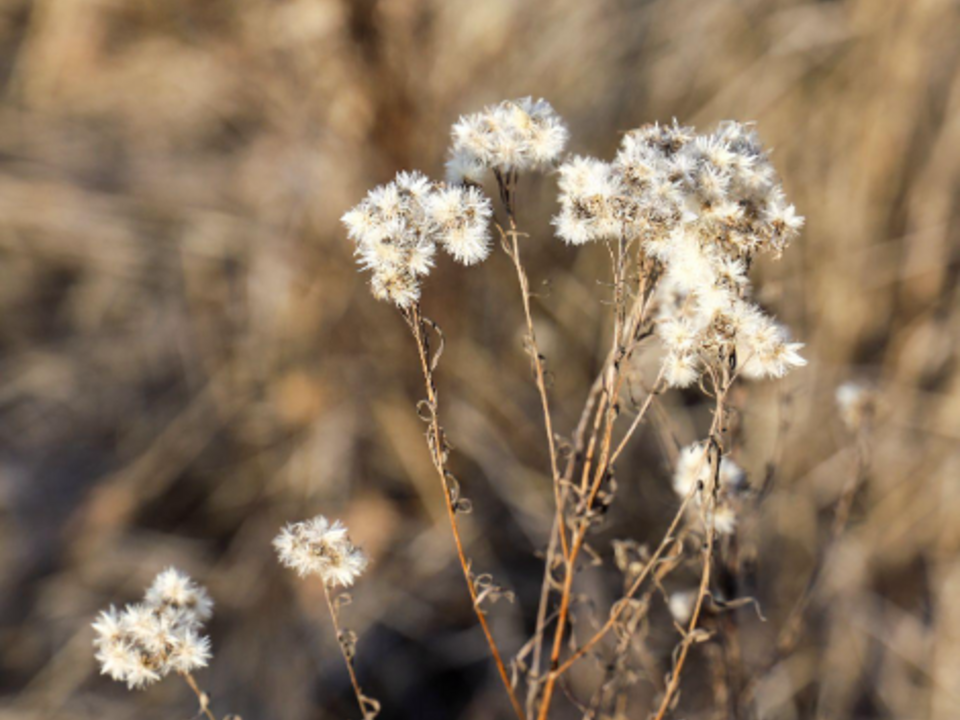
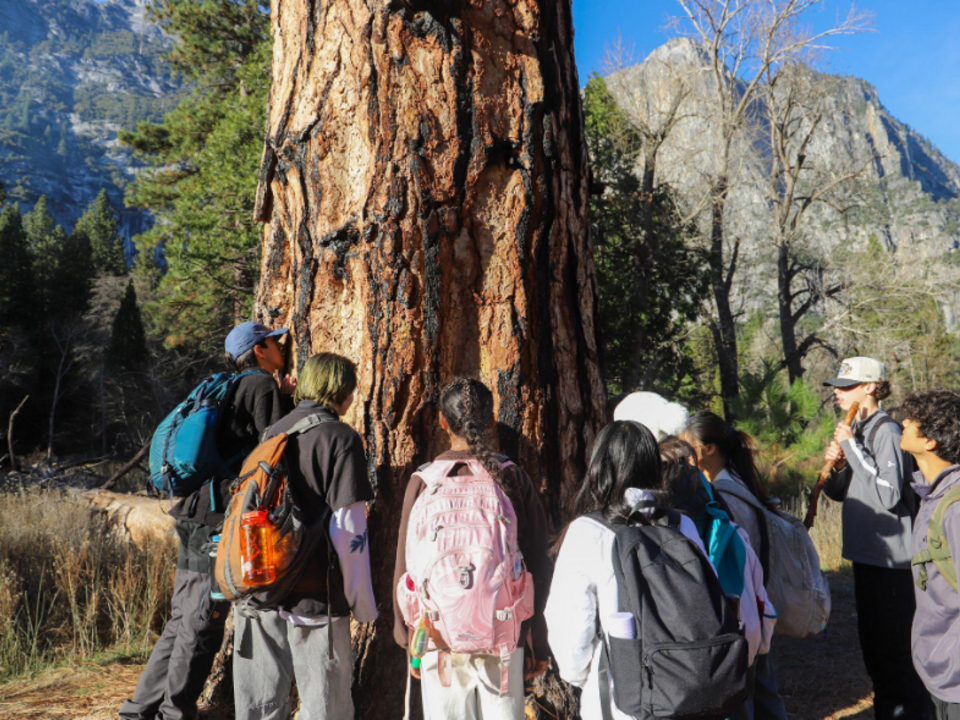
Your NatureBridge educator gives you the instruction to notice what you otherwise wouldn’t if you were surrounded by others. What you see and what you hear. Imagine starting at the base of a tall ponderosa pine in Cook’s Meadow. The bark is warm from the afternoon sun, and the air carries that familiar butterscotch scent. The meadow stretches out ahead, framed by the towering valley walls that make Yosemite so iconic.
Without conversation or footsteps around you, your senses become your guides.
Maybe it’s the distant rush of the Merced River.
The hollow tapping of an acorn woodpecker hidden in the trees.
The rustle of horsetail grasses brushing against each other.
The echo of a stellar jay’s call bouncing softly down the valley.
Your eyes begin to notice more, too—the intricate fissures in the pine’s bark, tiny insects threading their way through the grass, the way sunlight spills in bright pools across the clearing while other pockets stay cool and shaded. Half Dome peeks through the trees, quiet and steady. Smoke from prescribed burns drifts up from the valley, settling over the treetops like a soft, lingering blanket.
Alone, Yosemite feels different. Larger. Quieter. More personal.

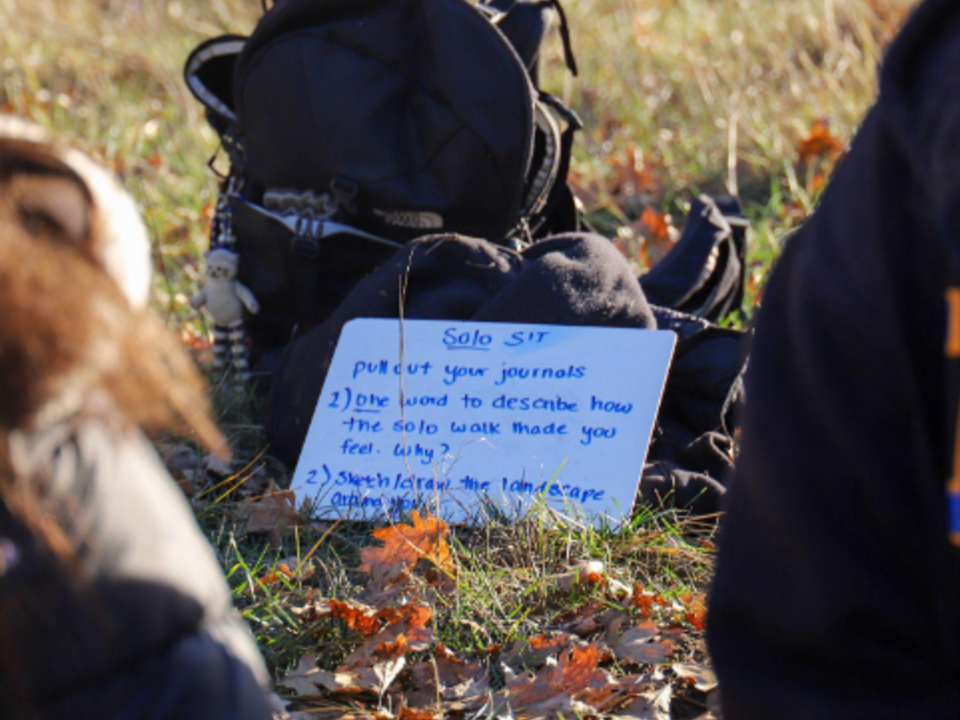
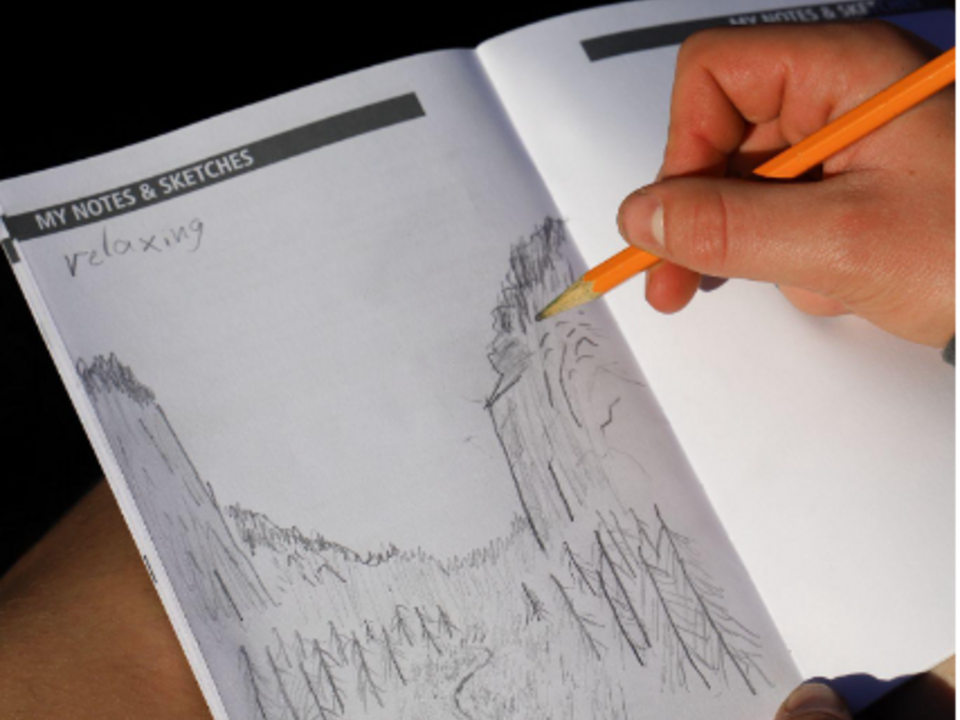
At the end of the walk, students settle into a solo sit—a few still moments where they simply observe and breathe. Then they’re asked to pull out their journals and record their reflections with a response to one question:
What is one word that describes how this solo experience made you feel?
Here are a few of the words students have shared:
- “Peaceful. Because it was the first time it was really quiet since we got here and I can keep thinking about my thoughts.” -Benni, eighth grader
- “I used the word serene, because it's peaceful but it's actually enjoyable.” -Eric, eighth grader
- “It made me feel insignificant, but in a good way.” -Seventh grader
- “Peaceful. It’s really beautiful how you can see all the mountains and the trees and just enjoy your time being there.” -Seventh grader
- “Calm, even with the cars going by it was pretty silent and everything seemed really perfect.” -Violetta, eighth grader
- “My word was big because for once everything felt really big for some reason. Without the crowd it’s more zoomed out.” -Isabella eighth grader
- "I chose two: quiet and interesting. It was really peaceful and cool to see all the mountains.” -Serenity, eighth grader
- “I put aesthetic because it was really pretty and beautiful and peaceful.” -Audriella, eighth grader
- “I chose serene because it was quiet, but you could hear the nature.” -Meher, eighth grader
- “I thought it was really quiet and kind of calm.” -Maryanne, eighth grader
- “I chose stunning because it was just really stunning how cool everything is. I mean you got a nice mountain there, you got a waterfall there, you got another mountain. It’s just really quiet and peaceful.” -Ilyas, eighth grader
- “I did relaxing because it was peaceful and quiet and kinda of puts me at ease” -Luke, eighth grader
- “I have a second one to share. Community because it brings people together, just to be in nature.” -Violetta, eighth grader
- “Surprised that nature is calm and not boring. That being solo can be peaceful. I always think about bears and scary animals but nature can be calm” –Anna
The responses vary, but a theme always emerges: nature makes space. Space to breathe, to reflect, to feel grounded.
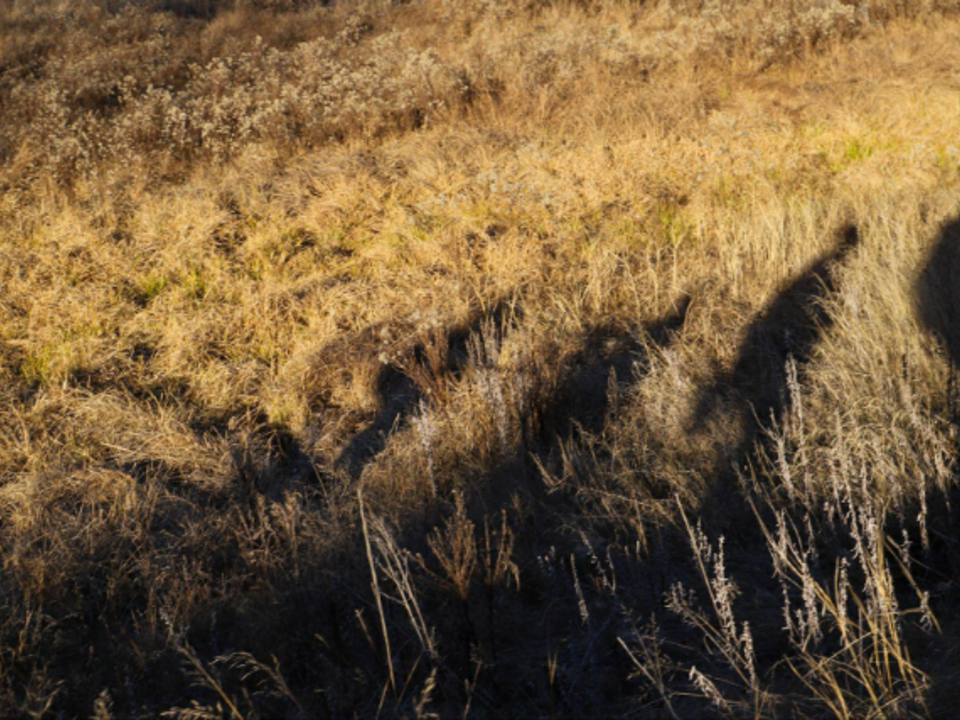

We are lucky to be in a place as stunning as Yosemite, with cliffs rising thousands of feet and meadows unfolding beneath them. But this feeling—the calm, the clarity, the sense of perspective—doesn’t live only in national parks.
You can find it in your neighborhood park, on a walk around the block, or under a tree in your own backyard. Nature doesn’t ask for perfection; it simply asks you to show up and pay attention.
So when life feels overwhelming or heavy, remember this moment in the meadow. Remember how quiet it felt inside your mind. Remember that sense of peace.
My final note to my students is this: Nature is always available to you. This feeling doesn’t disappear when you leave—it’s something you can carry with you and come back to anytime.

Educator’s Note
As a NatureBridge educator, I build solo walks into my programs because I’ve seen how powerful they can be. When students have a quiet moment alone in nature—without the noise of their peers or the pull of their phones—they start to notice things they might otherwise miss. These solo experiences are not just about experiencing Yosemite. They’re about giving students a tool they can take home with them.
For me, solo time is more than just a pause in the day—it’s a chance to help students build lifelong relationships with nature and with their own inner quiet. Even a few minutes alone outdoors can shift how we feel and help us reconnect with ourselves. My hope is that my students carry this feeling with them long after they leave Yosemite. –Sofia Soderberg
Stories

Virginia Teacher Night Recap: Emphasizing the Power of Outdoor Education
Our recent Teacher Night event in Chantilly, VA was a wonderful opportunity to connect with passionate educators from Loudoun, Fairfax, and the D.C. area and share the transformative power of outdoor education.

San Jose Teacher Nights Recap: Inspiring Bay Area Educators to Bring Learning Outdoors
Our recent Teacher Night events in San Jose, CA were a wonderful opportunity to connect with passionate Bay Area educators and share the transformative power of outdoor education.

Armstrong Scholars 2026 Trip Report
For the 2026 Armstrong Scholars, each day started with a song. Maybe it was "Unwritten" by Natasha Beddingfield, or "Believe" by Cher, or "Eye of the Tiger" by Survivor. Music and laughter carried us through our first waking moments—whether it was at 3 a.m. in wet sleeping bags preparing to hike up a pass, or at 8 a.m. next to a lake and ready for a rest day. We celebrated hard things the way we knew best—by dancing—at the end of a long day to warm up before slipping into our sleeping bags, or on top of a mountain pass, or at the trailhead at the end of a beautiful 65.7 mile-long journey.