From Chore to Change: Rethinking Stewardship Through Community Science with 5 Gyres

What we do at NatureBridge is science. How we do it is SEL (Social and Emotional Learning). Why we do it is stewardship,” says Kaitee Levinson, NatureBridge Yosemite’s Stewardship Education Manager. For decades, this philosophy has guided NatureBridge’s approach to place-based learning in the national parks, but in recent years it has also pushed staff to rethink how students can engage in stewardship in ways that feel meaningful, relevant, and actionable—during and beyond the time they spend on NatureBridge campuses. “Stewardship is an integral part of our mission!” Kaitee affirms. “It is what connects students physically to the landscape. It deepens their awareness of resource management while giving them the space to practice care.”
Historically, stewardship activities at NatureBridge Yosemite focused on partnering with the National Park Service (NPS) on their conifer removal projects, which offered students lessons on land management, fuels reduction and cultural burning practices. While some NatureBridge students also engaged in invasive species removal initiatives in collaboration with NPS, the curriculum around waste collection—referred to as MOOP, or “matter out of place,” collection—was less structured. (MOOP includes more than “trash;” it incorporates items such as historical artifacts, prompting conversations about MIP, or “matter in place,” and responsible reuse practices.)
Following the Covid pandemic, Yosemite educators began to notice that MOOP collection as an experiential learning activity was not resonating with students. Without a larger context or a deeper connection to why they were doing it, the task felt more like a chore and less like true stewardship. Students weren’t seeing the “why” behind the work, and without that connection, the impact of the activity was limited. “It became a fun joke on our campus when I launched the partnership to #MakeMOOPMatter, but it is entirely true!” Kaitee points out. “I want to make the work we already do mean something beyond our program; moreover, I want to track it. If we are able to show students how accessible community science is (literally at their fingertips on their phones) we can positively shift the culture to be one rooted in care.”
What makes stewardship projects successful is that initial spark or realization that we are all part of something bigger than ourselves; the “ah-ha” moment where we fully understand the depth of our interconnections.Kaitee Levinson, Stewardship Education Manager at NatureBridge Yosemite
Things began to change in early 2023, when, following an introduction at Yosemite Facelift—the park’s annual volunteer clean-up event—Kaitee began talking with leaders from 5 Gyres, another environmental nonprofit. For over a decade, 5 Gyres has been driving innovative solutions to plastic pollution by leveraging the power of science, advocacy, and community. Since 2022, their Plastic Free Parks initiative has equipped thousands of park visitors with tools to track waste trends within U.S. national parks and federal lands, with the goal of identifying and advocating for solutions that protect parks from plastic pollution. While learning about 5 Gyres’ work, Kaitee identified “a gap in our programming that 5 Gyres could fill… I wanted to create an opportunity for teachers (and students) to get inspired to give back to the earth wherever they are in the world.”
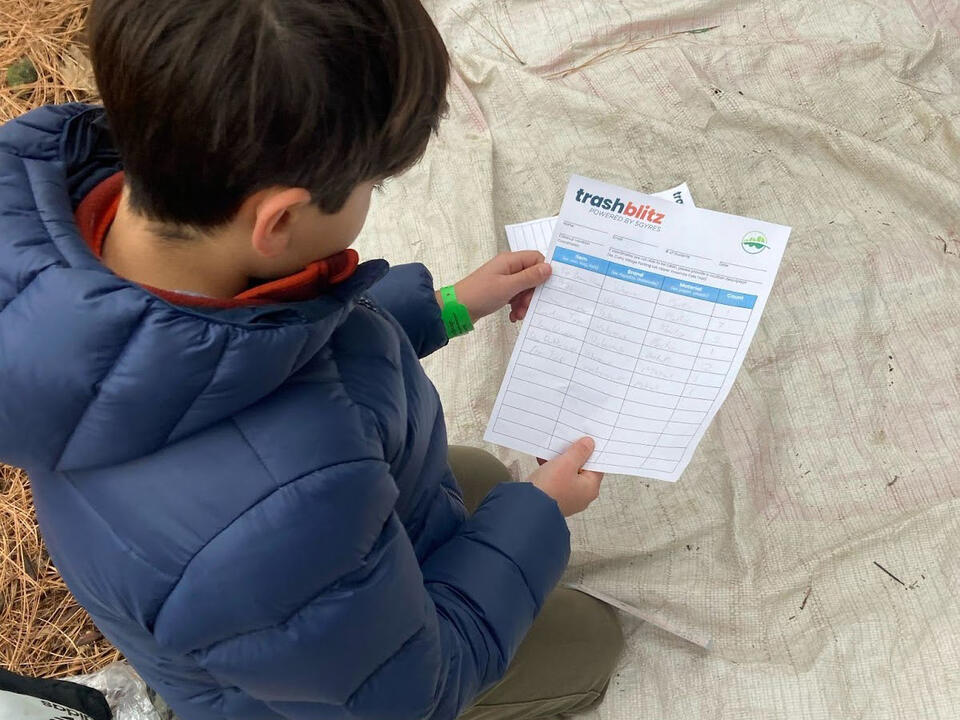
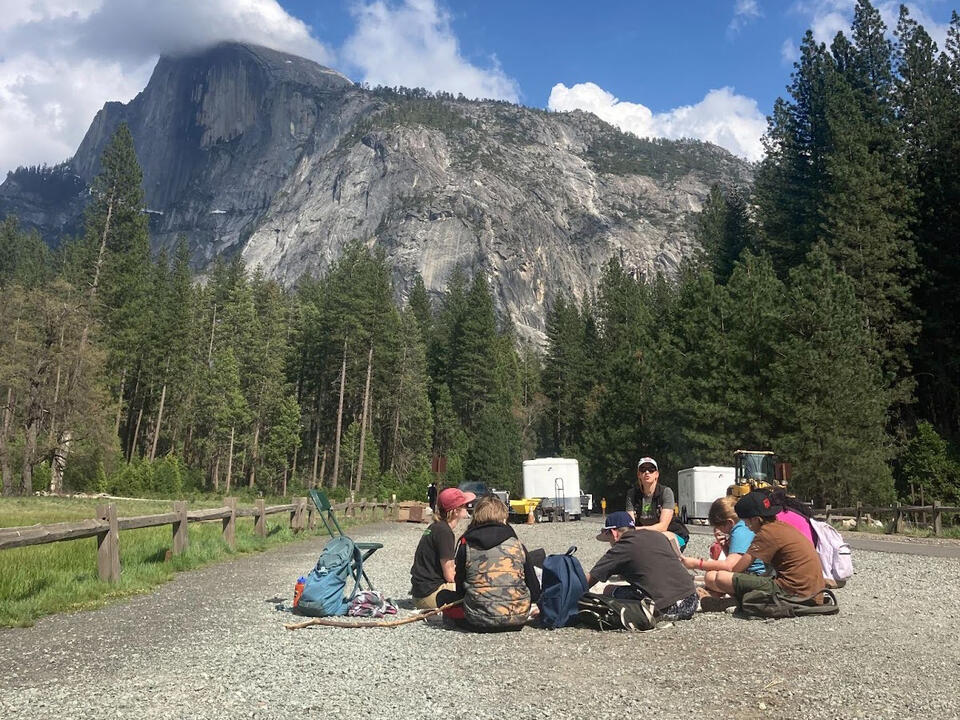
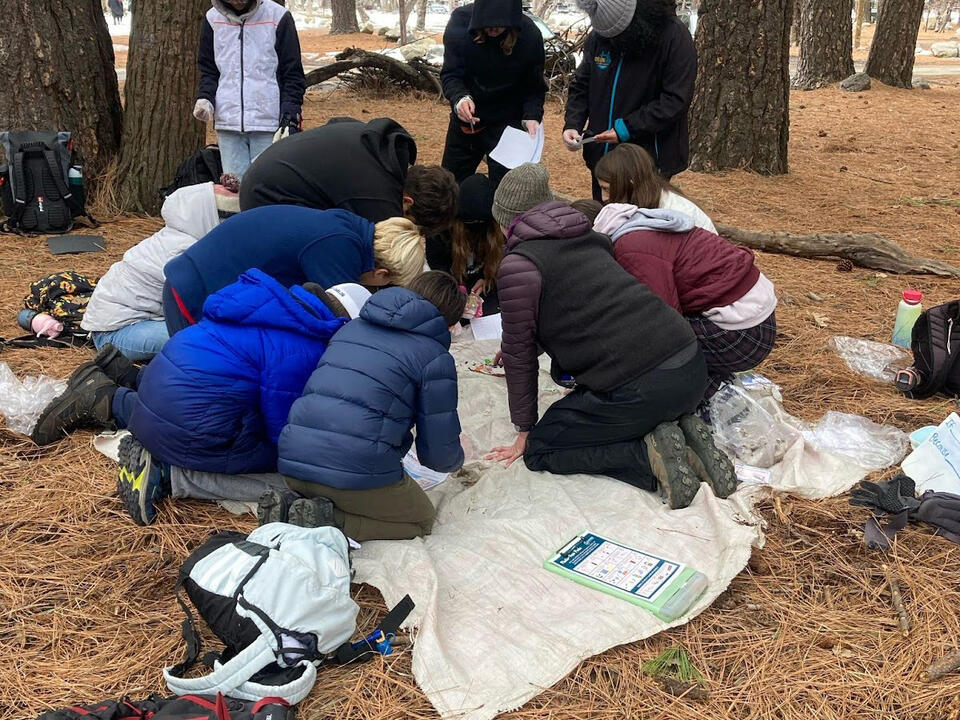
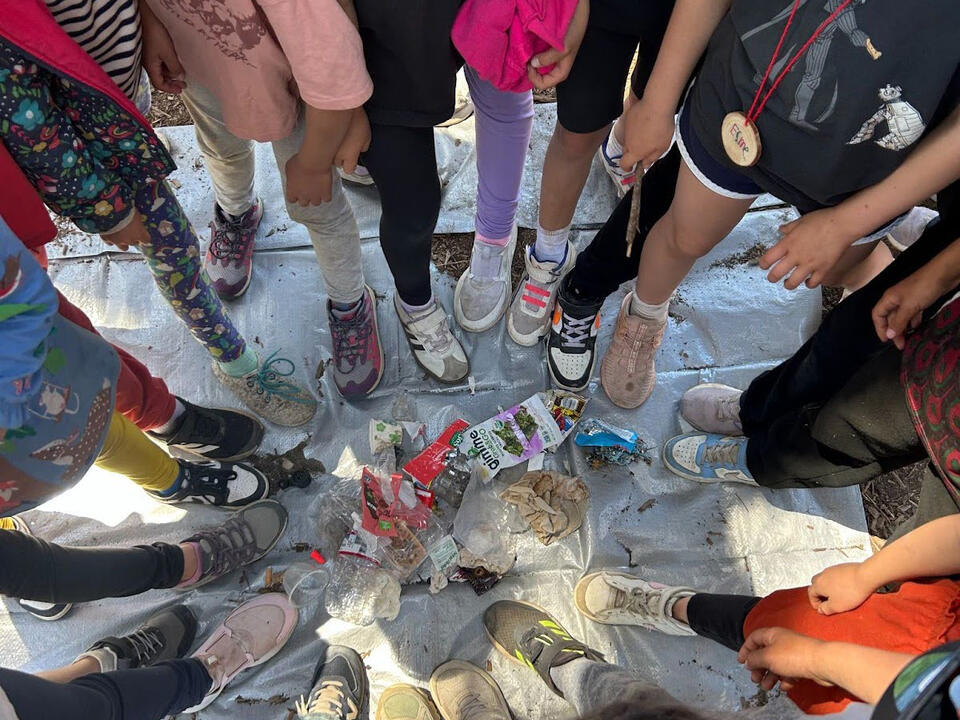
Conversations between Kaitee and 5 Gyres leaders quickly revealed a shared vision of blending science, data, and stewardship in a way that empowers young people. The official partnership between NatureBridge and 5 Gyres launched in Fall 2024, centered around data collection activities that are facilitated by TrashBlitz, a free app developed by 5 Gyres that allows users to log their data on trash and plastic pollution and upload it to 5 Gyres’ databases. NatureBridge students use the TrashBlitz app (or paper representations of the app’s interface) to engage in hands-on science education—documenting MOOP, contributing to a global dataset, and learning about plastics and their impact on our planet’s ecosystems. Nick Kemble, 5 Gyres’ Program Manager, works closely with NatureBridge leaders and educators to implement and adapt the program for NatureBridge’s needs.
TrashBlitz is community-powered science that educates, gathers data, and helps drive real change on plastic pollution—and who better [to participate in this] than students who are eager to protect our national parks!Nick Kemble, Program Manager at 5 Gyres
The impact on students was immediate. During Earth Week 2024, NatureBridge Yosemite hosted collection stations and encouraged friendly competitions between visiting school groups, resulting in a haul of over 300 pounds of MOOP in a single week. “I think students have really been surprised at how much trash seems not deliberate; like little scraps of wrappers that have fallen out of pockets,” reflects Nessa Schear, Stewardship Mentor Educator at NatureBridge Yosemite. “Students also really connect this activity to our watershed science activities and are able to see how connected the world is."
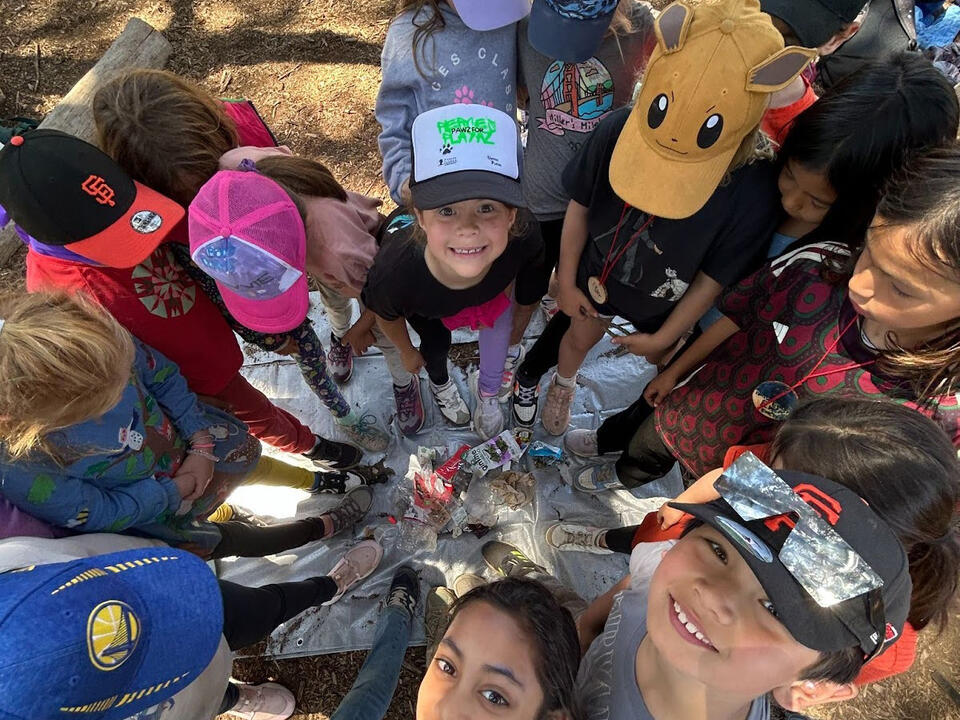
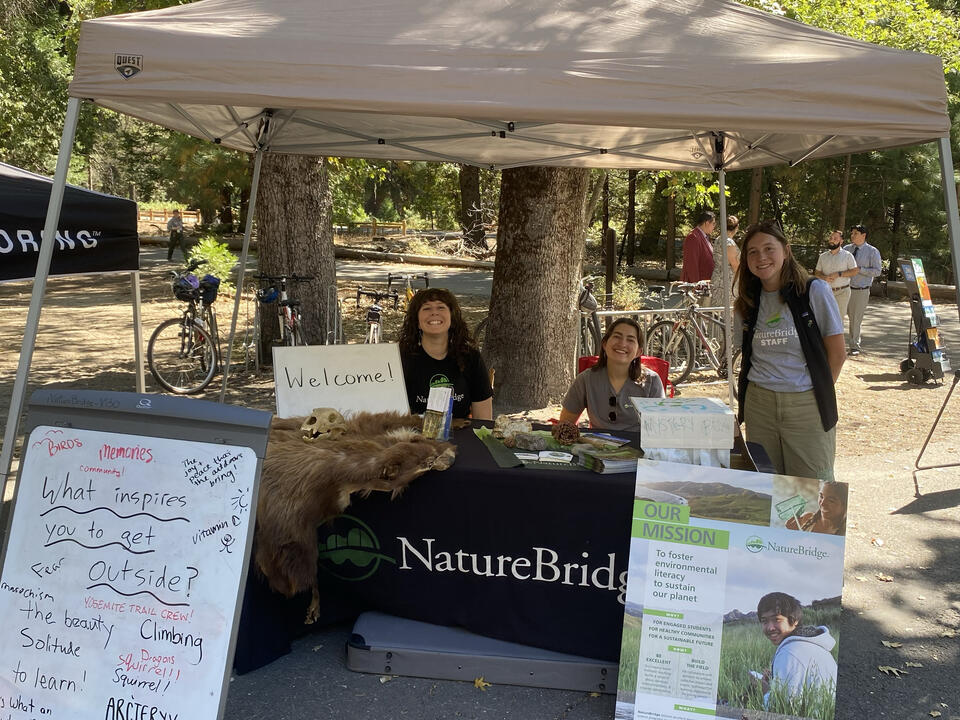
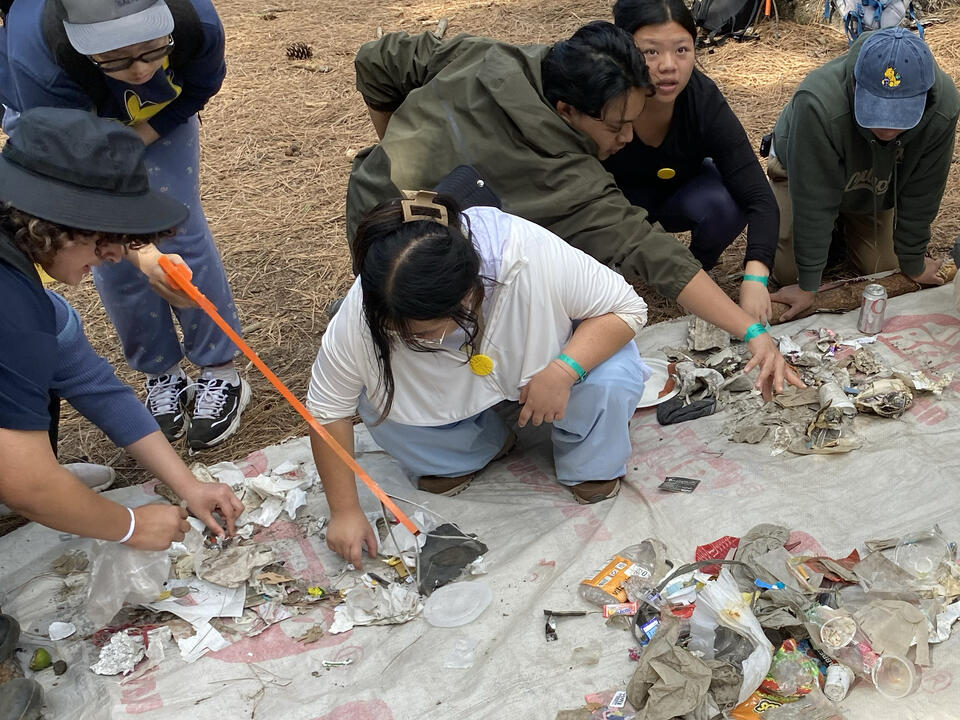
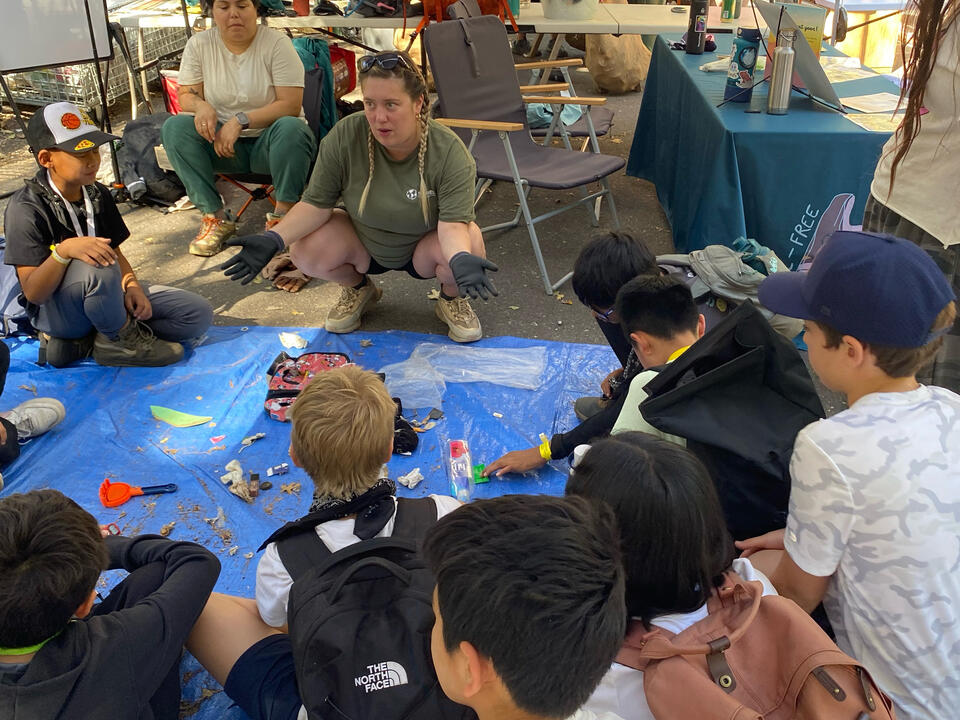
The success of the collaboration in Yosemite led to the project’s expansion to NatureBridge Golden Gate. In 2025, the Golden Gate campus collected over 1,000 pieces of MOOP, two-thirds of which were plastics. Day campers at NatureBridge Golden Gate’s Coastal Camp participated in TrashBlitz activities, as did students attending overnight environmental education programs with their schools. Dylan Meek, Lab Steward and 5 Gyres project lead at NatureBridge Golden Gate, notes that “chaperones and teachers reflected that they had never seen their students so engaged in an activity or inquiry before and were excited to see their students working together as a group during the sorting event.”
[S]tudents get really invested in collecting as much trash as possible out on trail; it becomes a core part of their experience.Dylan Meek, Lab Steward at NatureBridge Golden Gate
Looking ahead, the goals of the partnership are both long-term and far-reaching. Kaitee hopes to see TrashBlitz activities taking root at all four NatureBridge campuses and informing the conversations around stewardship that are happening with over 30,000 students across the organization annually. TrashBlitz data—with each entry tied to a geographic location—is helping to identify trends that are informing the actions of partners like the National Park Service, with impacts spanning from infrastructure improvements to policy advocacy. Ultimately, the TrashBlitz data supports legislative efforts such as congressional bills to reduce and ideally ban single-use plastics in national parks. Already, plastic pollution data collected by NatureBridge students and other TrashBlitz users has directly contributed to informing 5 Gyres’ work in the realms of both state and federal policymaking. “There is so much potential in the future of this partnership, both for NatureBridge and 5 Gyres, but also for every visitor of our public lands,” remarks Kaitee.
As more data continues to show how plastic impacts both the environment and public health, empowering young people with the knowledge and tools to take action feels more important than ever.Nick Kemble, Program Manager at 5 Gyres
Just as importantly, projects like TrashBlitz give young people tools they can use anywhere to continue learning, contributing, and practicing stewardship. Students leave NatureBridge equipped to stay engaged in environmental stewardship efforts in their own communities. As educators continue to explore culturally responsive teaching methods that engage students with active learning opportunities, the NatureBridge and 5 Gyres partnership is ensuring that stewardship feels relevant, empowering, and actionable. Together, we are helping young people learn to see themselves not just as visitors to national parks and natural spaces, but as lifelong stewards of them.
Want to join the TrashBlitz movement? Anyone can download the app and contribute to TrashBlitz Anywhere, which empowers individuals or groups to log their collection data anytime, anywhere!
Stories

Why Access Matters: NatureBridge Alum Alicia Bales Reflects on the Power of Outdoor Education
Alicia Bales, current Director of the Redwood Chapter of the Sierra Club, didn’t grow up seeing herself as an outdoorsy person. Raised in Sacramento, CA, she thought of herself as a “city kid” who had spent little time in nature—until a school trip to NatureBridge Yosemite changed everything.

Growing Educators, Growing Impact: Kerri McAllister’s Journey from NatureBridge to National Geographic
NatureBridge alum Kerri McAllister has built a career that spans classrooms, coastlines, and continents. Today, she serves on the faculty at Unity University in southern Maine and works as a naturalist, certified field educator, and undersea specialist with National Geographic–Lindblad Expeditions. Her path was deeply shaped by over a decade of working at NatureBridge.

An Evening with NatureBridge Raises Over $1 Million for Outdoor Education
On May 7, over 350 friends, supporters, and alumni joined us at Fort Mason in San Francisco, CA for An Evening with NatureBridge. This annual gathering was a celebration of the transformative power of nature, the strength of our community, and our shared commitment to inspiring the next generation of environmental stewards.